Make humanity shine.
Steun hulpverleners in gevaar met een donatie
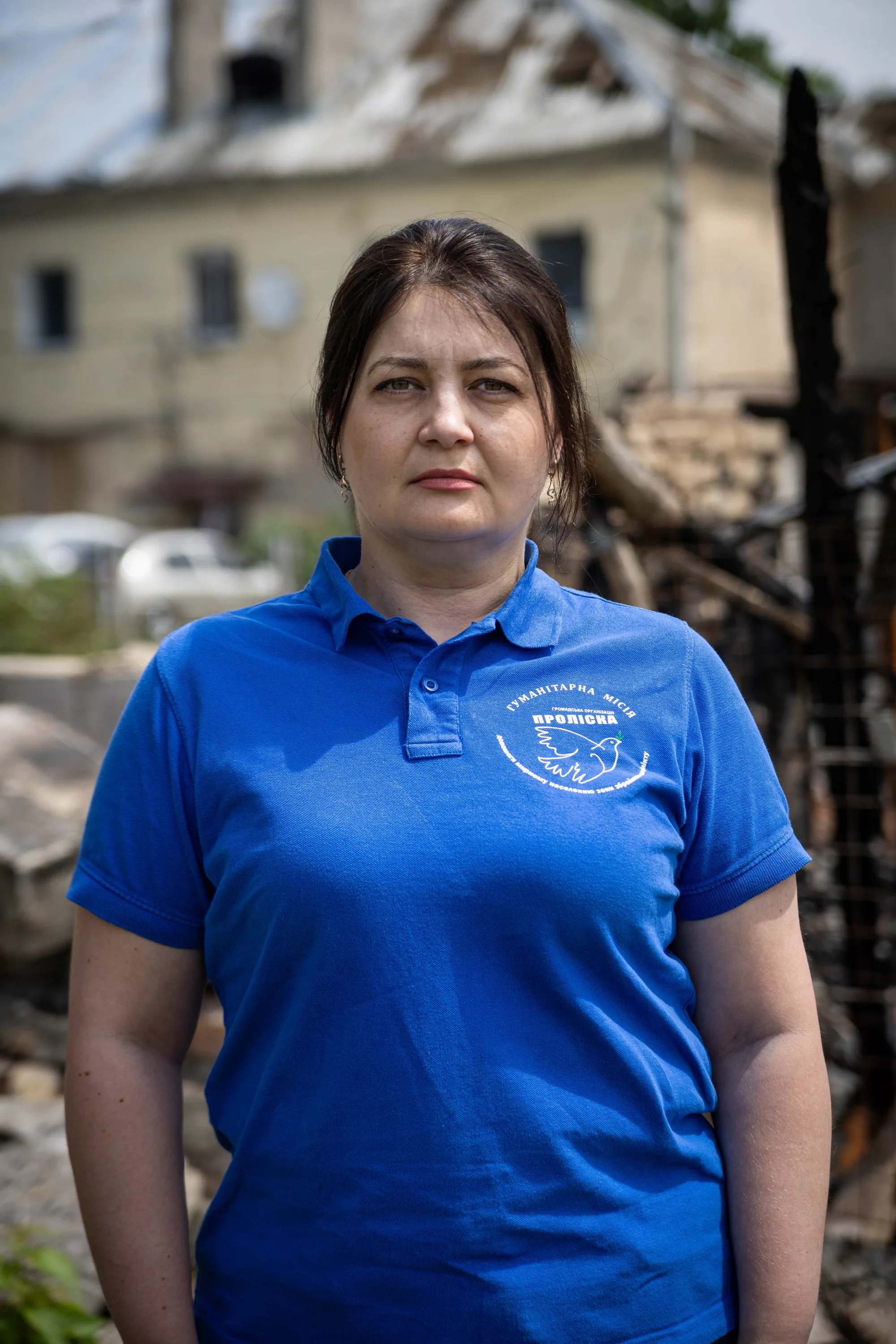
MYKOLA
Hulpverlener
Zwaargewond geraakt bij een Russische luchtaanval in Oekraïne terwijl hij een oudere vrouw in veiligheid bracht.
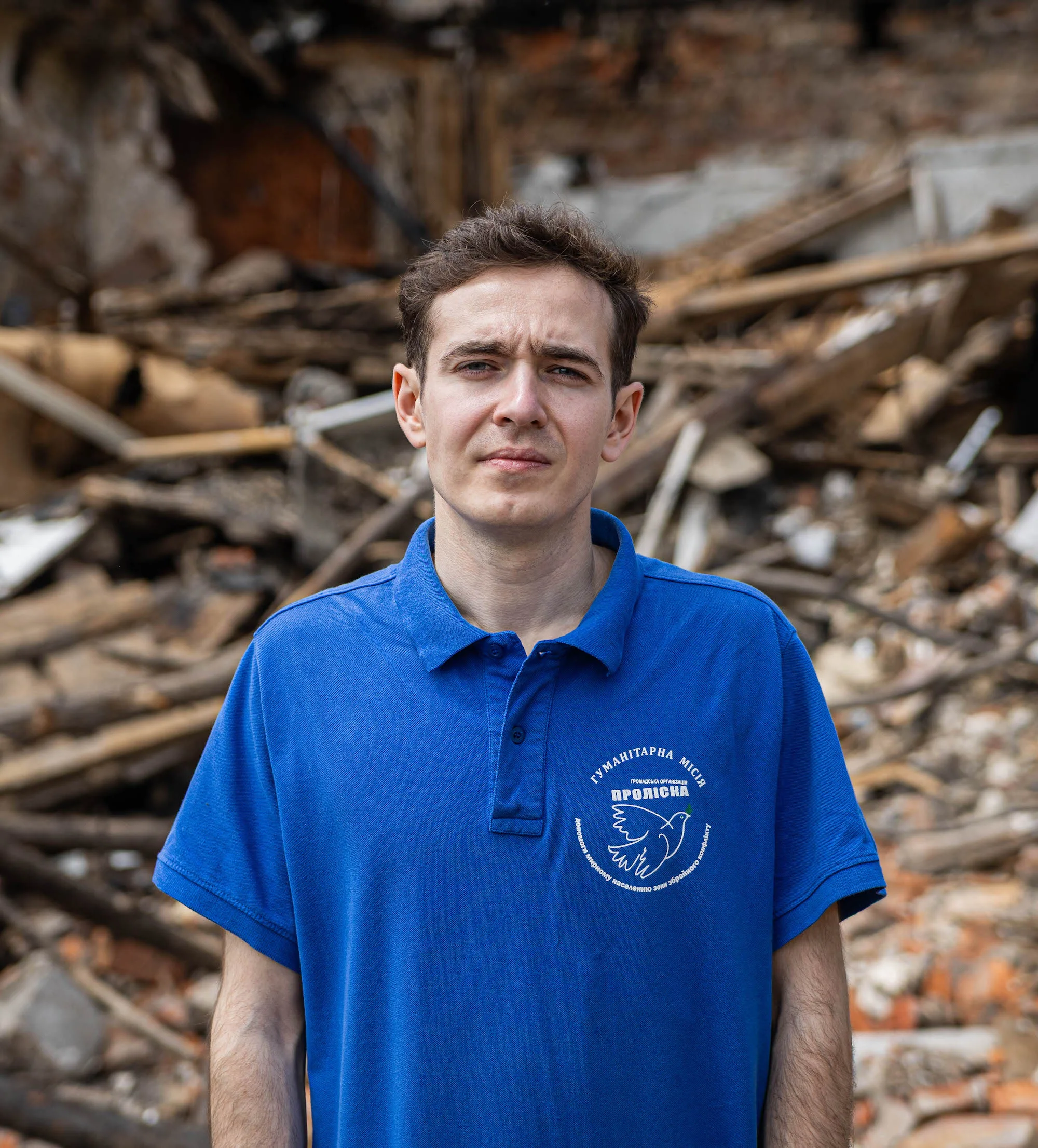
Mykola Obelchak was advocaat in Oost-Oekraïne voordat de oorlog hem zijn thuis ontnam. Hij sloot zich aan bij de humanitaire NGO Proliska om mensen die dicht bij de frontlinie wonen te helpen toegang te krijgen tot de hulp, pensioenen en juridische ondersteuning waarop zij recht hebben. Op 7 maart 2025 trof een Russische aanval een appartementsgebouw. Mykola snelde te hulp en bracht een oudere vrouw in veiligheid toen een tweede aanval plaatsvond. Hij raakte zwaargewond en bracht maanden door in revalidatie. Ondanks alles keerde hij terug naar zijn humanitaire werk. Vandaag zet Mykola zich in voor een betere bescherming van humanitaire hulpverleners. Protect Humanitarians ondersteunde zijn medische revalidatie, blijft hem begeleiden in zijn psychologisch herstel en heeft hem verwelkomd in ons Survivor Network.
"I saw people lose their homes. I saw people forced to evacuate. I saw people forced to suffer and live in fear. After that, I realised I could not stand aside."
Before he was injured, Mykola worked in case management. This included providing information and counselling, but also social support services. He helped resolve problems for those who had lost their homes, or who could not access the pensions and social benefits they were owed. Now he runs awareness sessions for children on how to stay safe, and connects people to humanitarian, psychological and legal support. Away from the work, he is someone who likes to stay active and keep finding new interests; before the war his were photography, drawing and reading poetry.
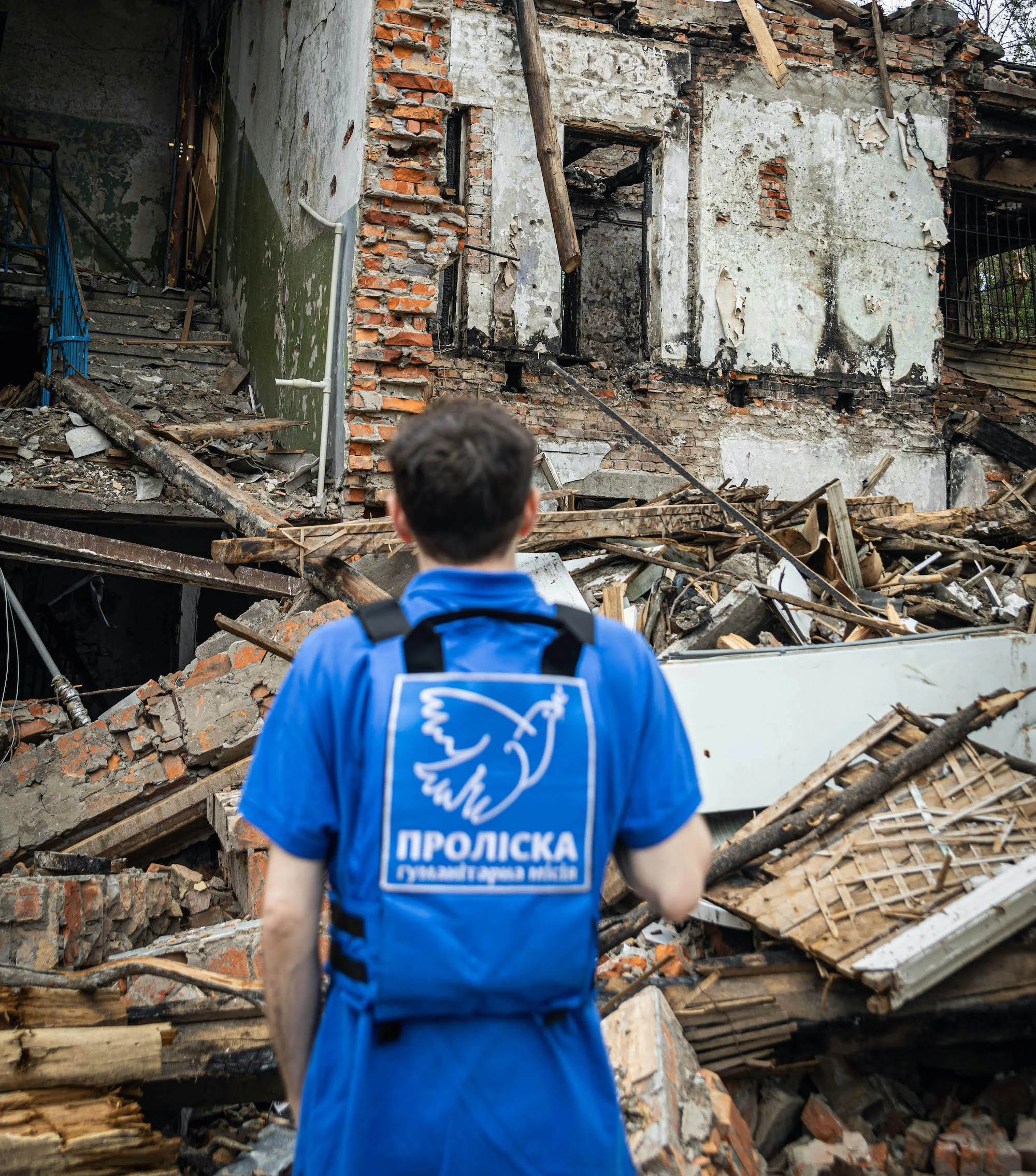
On the evening of 7 March 2025, a Russian missile struck a five-storey residential building. Mykola knew people who lived there. He and a friend were in a building nearby and went straight down. As they approached, glass crunching underfoot, cars destroyed, they saw people who had already been killed, and others being given first aid. In the middle of it he saw a woman he had helped through his work at Proliska. He got her out of the building and began walking her towards her relatives.
A few hundred metres on, a second strike hit, a cluster munition. Mykola saw the blast directly above him. A moment later he was on the ground, unable to move or feel the lower half of his body, struggling to breathe, wounded in several places. The only thing he could do was call someone close to him and tell them he was dying. Then he called for help. He was taken to the nearest hospital in time, but was losing blood fast, and lost consciousness.
"When the explosion happened, I saw the blast directly above me. A moment later, we were on the ground. I could not move or feel the lower part of my body."
He woke days later. What followed was a long stabilisation and then rehabilitation, tough mentally and above all physically. The pain, he says, made him count the minutes, then the hours, weeks, months, not knowing how long he would wait to learn what kind of life lay ahead.
When he stood for the first time after about three months, having been unable even to sit for the pain, he understood how much it matters to fight despair inside yourself.
He has not fully recovered. He still lives with the psychological and physical changes, and so do those closest to him, more on edge, more often anxious, since it happened.
When he could finally stand again he wanted to go home. But his home town sits close to the combat zone, and after only a few weeks the constant explosions, missile and drone strikes forced his family to evacuate. Of his home, and his town, only ruins remain.
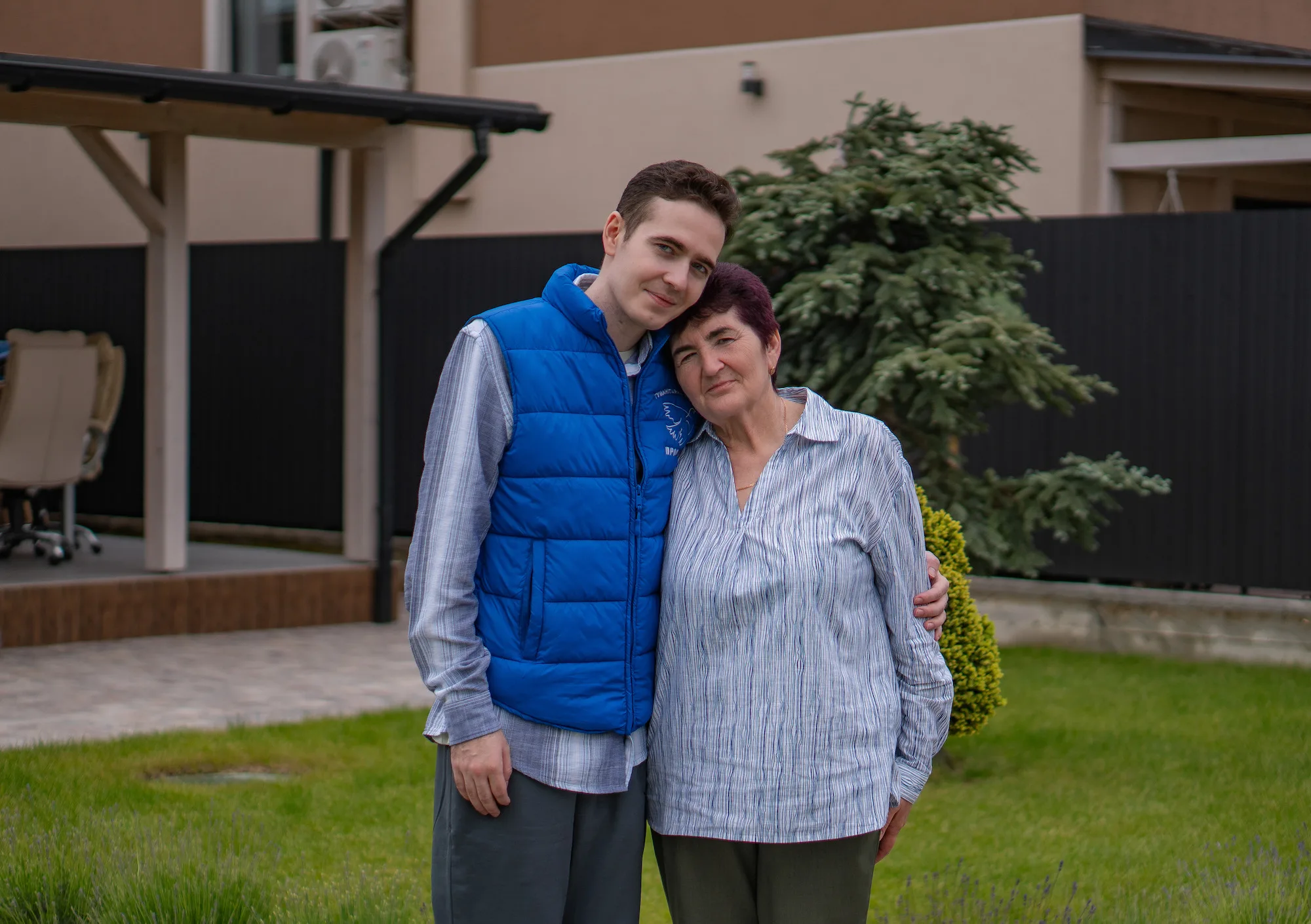
Mykola is direct about what carried him through, love and support, understood more powerfully than ever in his life. His mother, constantly at his side. The colleagues who visited. And Proliska itself, which the same evening contacted doctors for urgent surgery, arranged his medical evacuation, paid for examinations, organised his rehabilitation and a period of recovery in a peaceful region away from the air-raid sirens, and worked with his family throughout. His organisation's leadership opened an account so colleagues, relatives and friends could contribute to his treatment.
That support also exposed a gap. Undergoing treatment, Mykola realised that although he is recognised as a humanitarian worker, that status gave him no particular protection, no further guarantees, and that he had no medical insurance when he needed it.
Across his time in the sector, Mykola has watched the danger to humanitarian workers in Ukraine grow enormously, driven by the advance of military technology. Teams working near the front line face missile, bomb and drone strikes. He describes the "double-tap": a strike happens, rescue and humanitarian teams arrive, and thirty or forty minutes later, while they are helping people on the spot, a second strike comes, catching the rescuers. Aid workers are hit by repeated drone attacks while trying to evacuate people.
From his own experience, Mykola argues for bringing the whole set of protections together, because no single one is enough on its own: dedicated funds to support wounded humanitarian workers, and the information so workers know those funds exist; armoured vehicles and anti-drone technology for those working near the front line; medical insurance for every humanitarian worker; funding for the examinations and rehabilitation that, as he learned firsthand, cost enormous sums even in Ukraine; automatic first-aid skills; and ongoing psychological support for people working at the front.
"Only bringing all these issues together, in a comprehensive way, can solve the issue of protecting humanitarian workers."
Mykola hopes his story becomes one step towards making his colleagues safer. He wants one thing understood above all. He would like people to understand that behind every story there are real people, their losses, their experiences, and their struggles, with the strength not to give up and to keep helping others even after everything they have been through.
How Protect Humanitarians supports Mykola
Protect Humanitarians mobilised for Mykola after he was wounded and supports him today as part of our survivor network, alongside humanitarians and families affected by attacks, detention and persecution worldwide. We also support Mykola with English classes so that he can share his own story more widely.
Photos: © Proliska/Protect Humanitarians
Uw gift biedt psychologische ondersteuning, juridische bijstand en pleit voor de vrijlating van gedetineerde hulpverleners.