Make humanity shine.
Donate to support humanitarians at risk
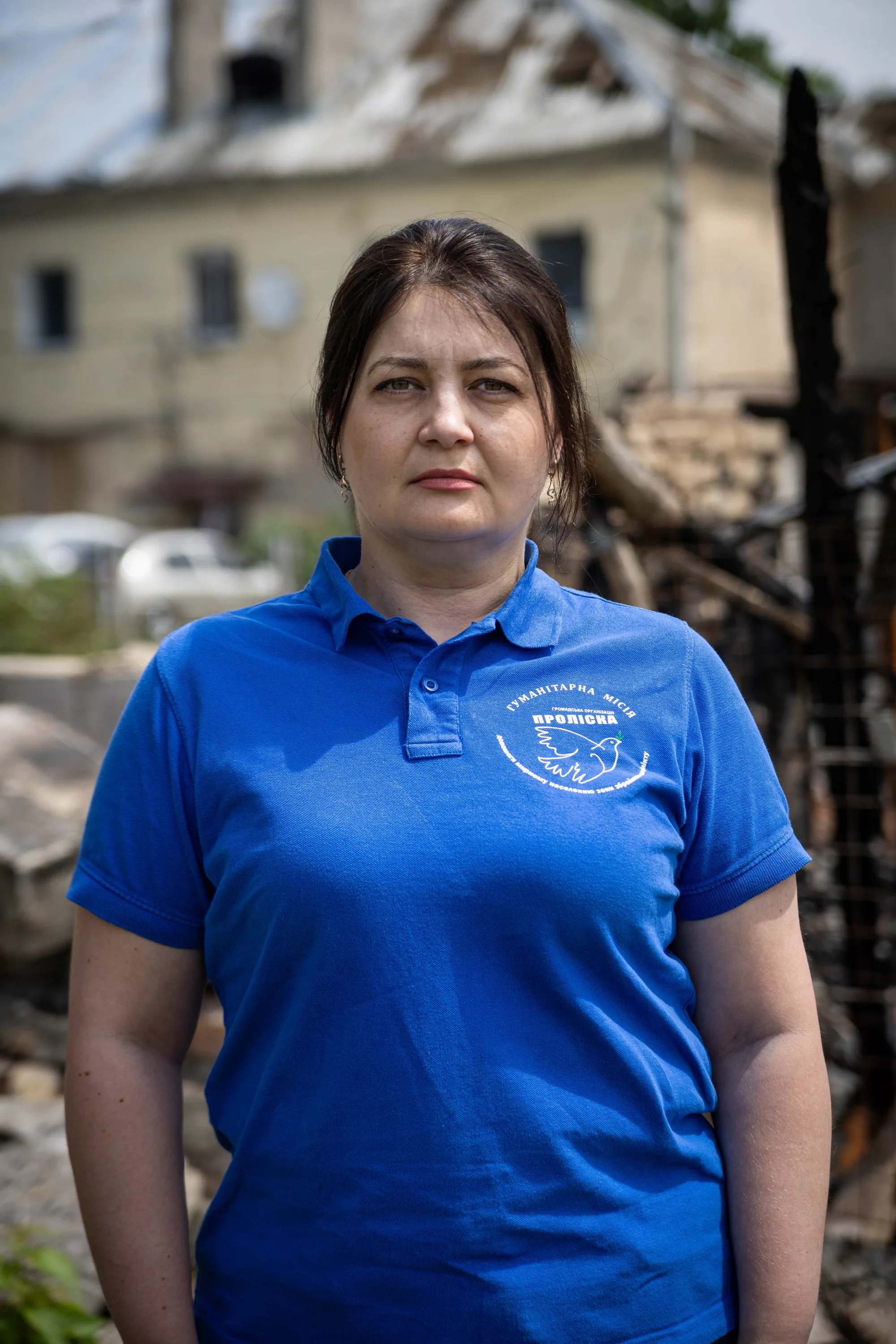
YEVHENIIA
Humanitarian
Evacuates civilians from Ukraine's front line, survived a missile strike on her NGO office.
Yevheniia is a mother and a humanitarian worker from Sievierodonetsk, in the Luhansk region of eastern Ukraine, a city now under occupation. The war reached her family suddenly, and like so many others she had to leave her home. She went through the whole journey that people fleeing the front line are still going through today. It was precisely having lived it herself that led her to humanitarian work. People who have already survived this, she believes, understand best those living through it now.
"It seems to me that people who have already lived through this understand best those who are living through it now."
Outside the work, she describes herself as an ordinary woman, an ordinary mother. She loves nature, and she loves to paint. When she paints, with anything at all, that is where she finds calm.
Through her work with the humanitarian mission Proliska, she helps to organise the evacuation of civilians from frontline areas, opening social transport routes to reach remote settlements that would otherwise be cut off. For the people she helps, she says, she and her colleagues are not only rescuers; sometimes they are something closer to psychologists, people who will simply talk, simply be there. Sometimes sitting silently beside someone is itself a great act. Because she has been in their place, she wants to give them the best she can.
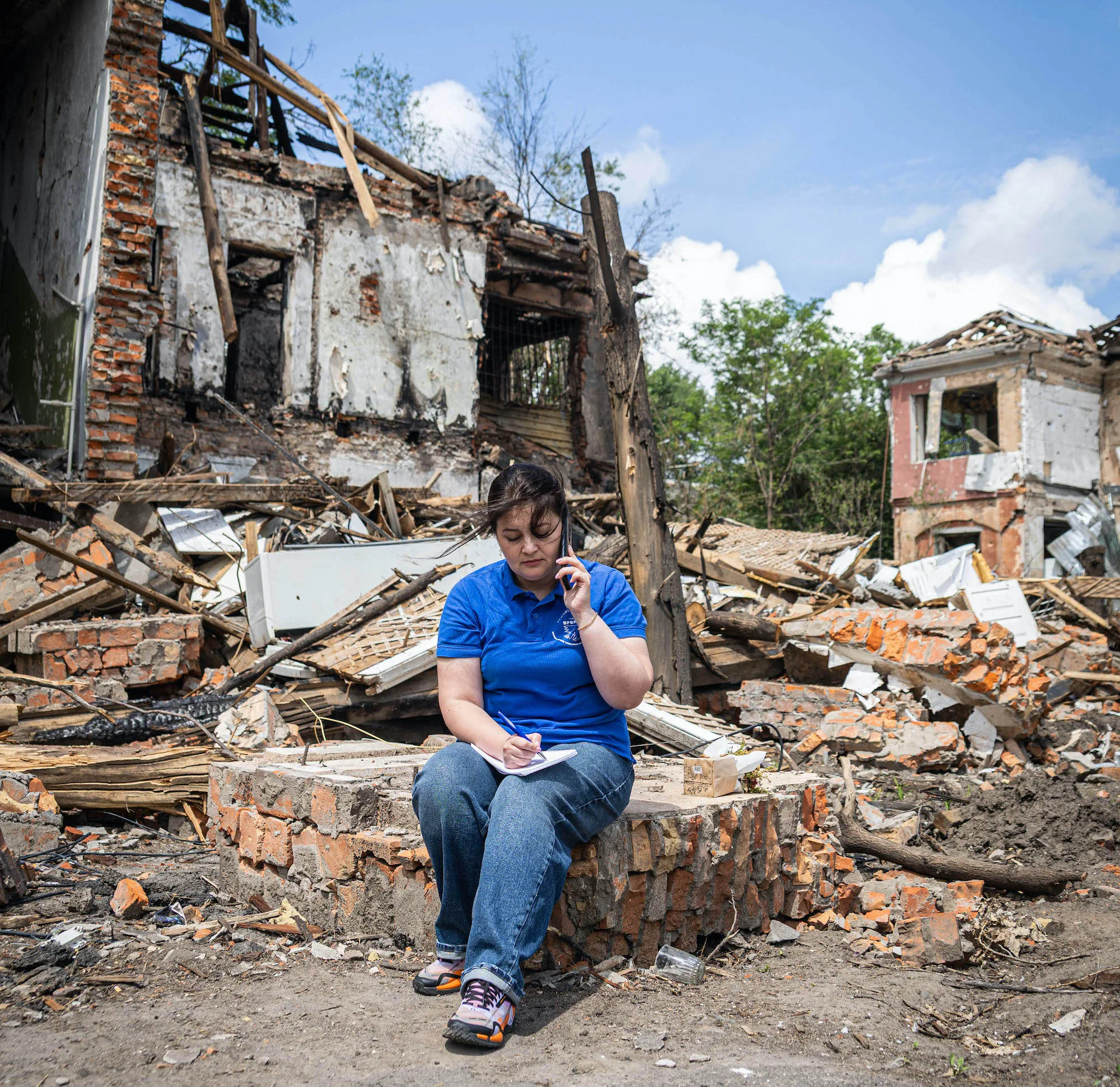
It’s difficult for Yevheniia to talk about what happened on 1 December 2025.
Yevheniia was at the Proslika office. There were blackouts, and the mobile network was unstable, so when a request came in from the head of a frontline village, Zoriane, she stepped out into the yard to take it. There was no air-raid warning. She saw the missile before she heard it, the flash, then the sound, and then, she knew, the blast wave. All the glass came flying at her. The missile passed by without hitting her.
What she remembers most is not fear for herself. In those seconds her first thought was that if something happened to her, the evacuation requests would not get through, the drivers would not get the messages, and people would not be helped. Only afterwards did she realise the strike had hit her own office building.
For two weeks she could not walk calmly down that street. A constant ringing filled her ears and would not stop; she could only fall asleep to a quiet melody through earphones. She had thought she had already worked through this kind of trauma, from earlier times back home, but the panic attacks still come when she hears explosions. Knowing the drill, where to go, what shelter to find, helps in the first seconds. But the trauma, she says, does not simply pass.
"Yes, this incident will not be forgotten. Yes, this trauma will not simply pass. But every day is a small new life, and you have to live it with faith in the future."
The first help came from her coworkers and the leadership of Proliska. At first she did not think of seeing a doctor, she assumed the fear would pass, but it turned out she needed to. Her colleagues put her in a car and drove her as far from the building as possible, then came the calls, how are you, are you wounded, what do you need. There was the hospital, the numerous examinations, the medicines, someone simply staying close by, and a conversation with a psychologist to bring her back to the here and now. Together, she says, it is somehow easier.
In just one year, Yevheniia has seen the war change. FPV drones, small aircraft flown by an operator watching a live camera feed, now reach far behind the front line. The danger to humanitarian teams has grown with this technology. Yevheniia's colleagues believe the strike that hit their building may have been deliberate. The address of Proliska's office and warehouse is listed publicly, and the attack came while around 16 staff were there. Across the full-scale invasion, attacks on humanitarian workers and on those who come to help have risen steadily, which Proliska sees not as chance but as a deliberate effort to frighten aid workers away and cut people off from help.
Asked what humanitarians need, Yevheniia immediately describes the protection needed for her team on the front lines. Provide personal protective equipment, armoured vehicles and electronic-warfare systems to counter the drones; life insurance, which many humanitarian workers in Ukraine still do not have; and regular training in first aid and psychological first aid. And rest. Aid workers pass every story they meet through themselves until the work stops being a job and becomes a mission, and the risk of burnout is high. Teams need to be able to switch off, she says, so that they can help better.
Yevheniia is also clear about what national staff bring. They are motivated, she says, because they know exactly whom and what they are working for. They work for their own people, their fellow citizens, sometimes their own relatives. Whether or not there was shelling in the night, whether or not they slept, they get up and go to help. It is a point her organisation underlines. In the most dangerous locations, right up against the "zero line" where international staff can enter only in agreed, limited windows, it is national workers who are there every single day, because they do not just work there. They live there.
"Every day, when I wake up, I understand first of all what this is for and whom it is for. That is my greatest motivation."
What she dreams of for the future is simple. She hopes that she and her family will one day have a home of their own again, where they can gather together. And not only her family, but every family in Ukraine and beyond, able to come together again, to embrace, to simply talk and spend time together.
To anyone who wants to become a humanitarian worker, she would first tell them the truth about the risks, because the work takes not just a big heart but great strength of spirit. It is hard. But every morning when she wakes, she knows what it is for and who it is for, and that, today, is her greatest motivation.
She wants people who see her photo and read her story to really hear her message and make sure that the advocacy efforts of her and her organisation are heard.
How Protect Humanitarians supports Yevheniia
Protect Humanitarians stands with Yevheniia as part of our survivor network, alongside humanitarians and families affected by attacks, detention and persecution worldwide.
Photos: © Proliska/Protect Humanitarians
Your donation provides psychological support, legal assistance, and advocates for the release of detained humanitarians.