Make humanity shine.
Donate to support humanitarians at risk
YUSRA
Family member
Daughter of humanitarian, wrongfully imprisoned in Tunisia for 19 months, convicted for helping refugees.
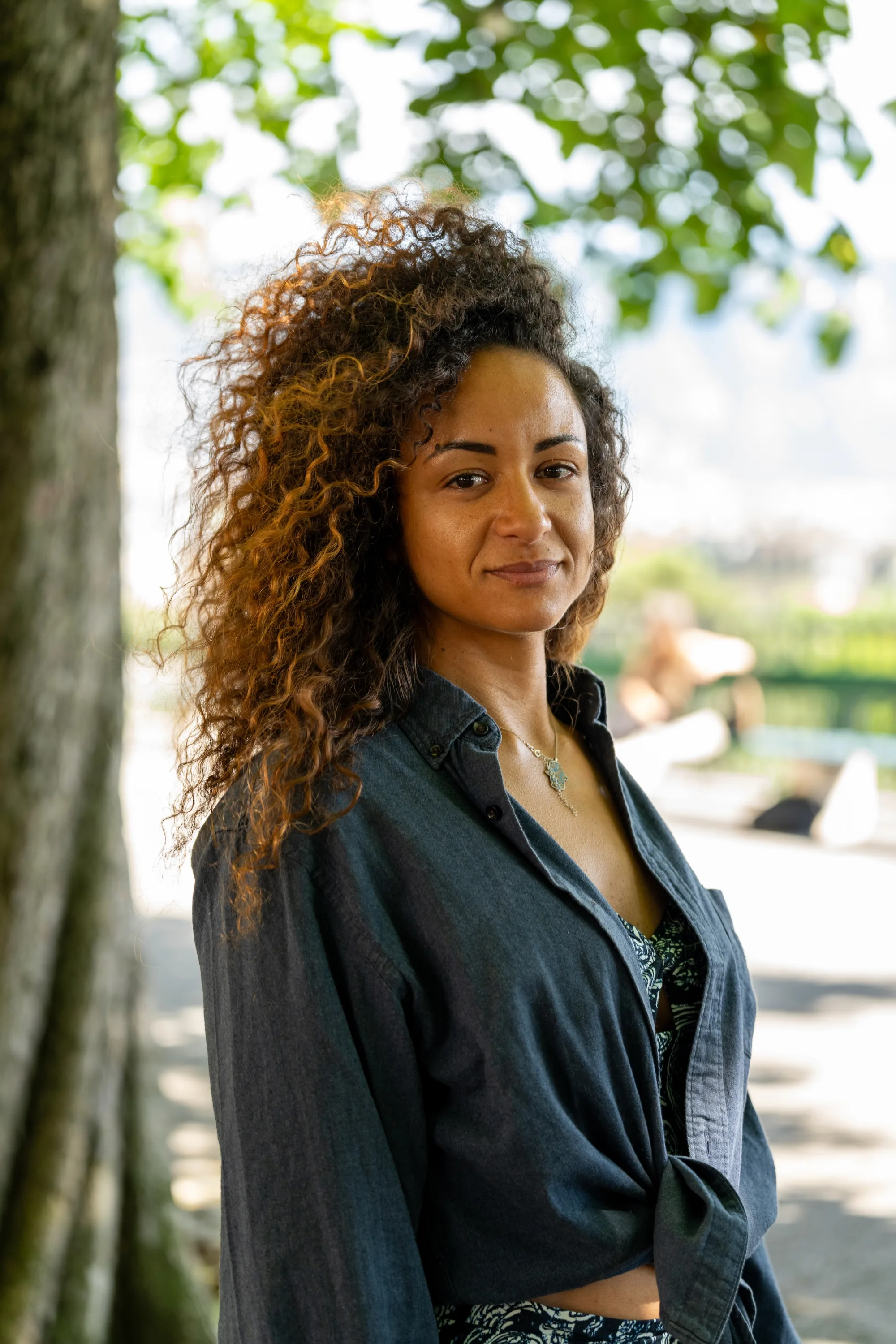
Yusra Djemali is 34, born and raised in Geneva, a mother to a young child, studying marketing and communication. She is the daughter of Mustapha Djemali, the founder of the Tunisian Council for Refugees, who was arrested in Tunisia in May 2024 and held for 19 months without conviction. This is her father's story, and it is also hers, because when he was taken, the fight to free him became her life and that of her siblings.
Her father, she says, is calm, humble, and endlessly full of stories, the kind of man you could listen to until three in the morning without growing bored. He had a long career with the UN's refugee agency, running its Middle East offices from Beirut before retiring in 2004. But retirement brought about a new beginning. He spent years quietly building the Tunisian Council for Refugees, the organisation that would become the peak of his life's work, driven by a simple conviction that Yusra grew up hearing, that he had been given chances others were not, so he was bound to give something back. Everyone, he believed, is capable of helping. In the end, we are all human beings.
On 3 May 2024, investigators came to the Council's office and took Mustapha and his deputy into custody. At first the family did not take it seriously. They assumed it was an administrative mistake, that they would meet for dinner that evening.
Yusra was in Switzerland with a nine-month-old baby she was still breastfeeding. When she understood her father was in prison, she did not hesitate. She took her son in her arms and left for Tunisia.
What followed consumed years of her life. Her father was over 80, in fragile health, on medication, held through extreme Tunisian summers and two cold winters. The family cooked his meals twice a week because he could not eat prison food. They searched for lawyers and went through five or six of them, some dishonest, some who saw foreigners and asked for money.
They were told at first to keep it quiet, so they struggled alone, spending their savings, taking leave from work that stretched into leave from their careers. And because every personal and professional account of their father was frozen, and remains frozen today, even paying for housing and insurance became a mess they were never equipped to handle.
The visits were the hardest part. Yusra queued for hours, sometimes a whole day, in 50-degree heat with her small son, for a single ten-minute visit a week, conducted through a pane of glass by telephone. She and her siblings would try their best to stay strong for their father. They knew that whatever they were suffering in the queue, it was ten times worse for him inside, and that seeing them strong was what kept him holding on.
“He never showed us his suffering completely. And I hope that it is perhaps also through our presence that he held on.”
For a long time, Yusra and her brother were alone, struggling to find a solution with no support. But over time, organisations came forward with legal and financial support and the family met others who had lived the same nightmare and come through it. Learning they were not alone, Yusra says, is what let them keep going.
There was no conviction in all of it. Mustapha was held for 19 months in pre-trial detention with, as the family describes it, an empty file, accused in practice of nothing. They made seven requests for his release. All seven were refused.
The eighth time, they were not expecting anything. The hearing on 24 November 2025 had already been postponed more than once, and they had prepared themselves for release so many times before that this time they had done nothing at all. Yusra was sitting on the sofa when the lawyer called around eight in the evening and asked if she had food ready for her father, because he was getting out in two hours.
"I said: what do you mean, that's not possible. I was on my sofa and I screamed. I said: no, that's not possible!"
He was released late that night, close to one in the morning, alongside his co-accused Abderrazek Krimi. The families went together to a café to sit and talk. It felt, Yusra says, unreal.
Unfortunately, release was not the end. Her father came out with serious health problems, his lungs, kidney stones from having no clean water to drink, and a sense of being lost that she compares to a child re-learning how to live.
He has since gone back to tending his land and the family house in the south, which is his pleasure, and the family try not to disturb him in it. But the case is not closed. There is an appeal. The accounts are still frozen. And for Yusra and her family there is a long rebuilding still underway, though they are clear that the worst has passed and each day is better than the one before.
What Yusra wants understood is that the people on these posters chose this work freely, out of love and solidarity, and are now being punished for something they decided to give from the heart. If a profession built on helping starts to frighten people away, there will be fewer of them, and the problems will only pile up. Humanitarian aid, she says, is essential, because otherwise the world will crack.
"These are people who decided to help. They do not deserve what is happening to them. We must support them, we must talk about them."
What the experience left her with, in the end, was a kind of rage to help, to reach the families going through what hers went through, and to tell them the thing she most needed to hear: you are not alone, we are all here.
How Protect Humanitarians supports Yusra and her family
Protect Humanitarians supported Yusra's family through her father's detention and stands with them today as part of our survivor network, alongside humanitarians and families affected by attacks, detention and persecution worldwide.
Photos: © Victoria Vidal/Protect Humanitarians
Your donation provides psychological support, legal assistance, and advocates for the release of detained humanitarians.